
Last updated November 23, 2026
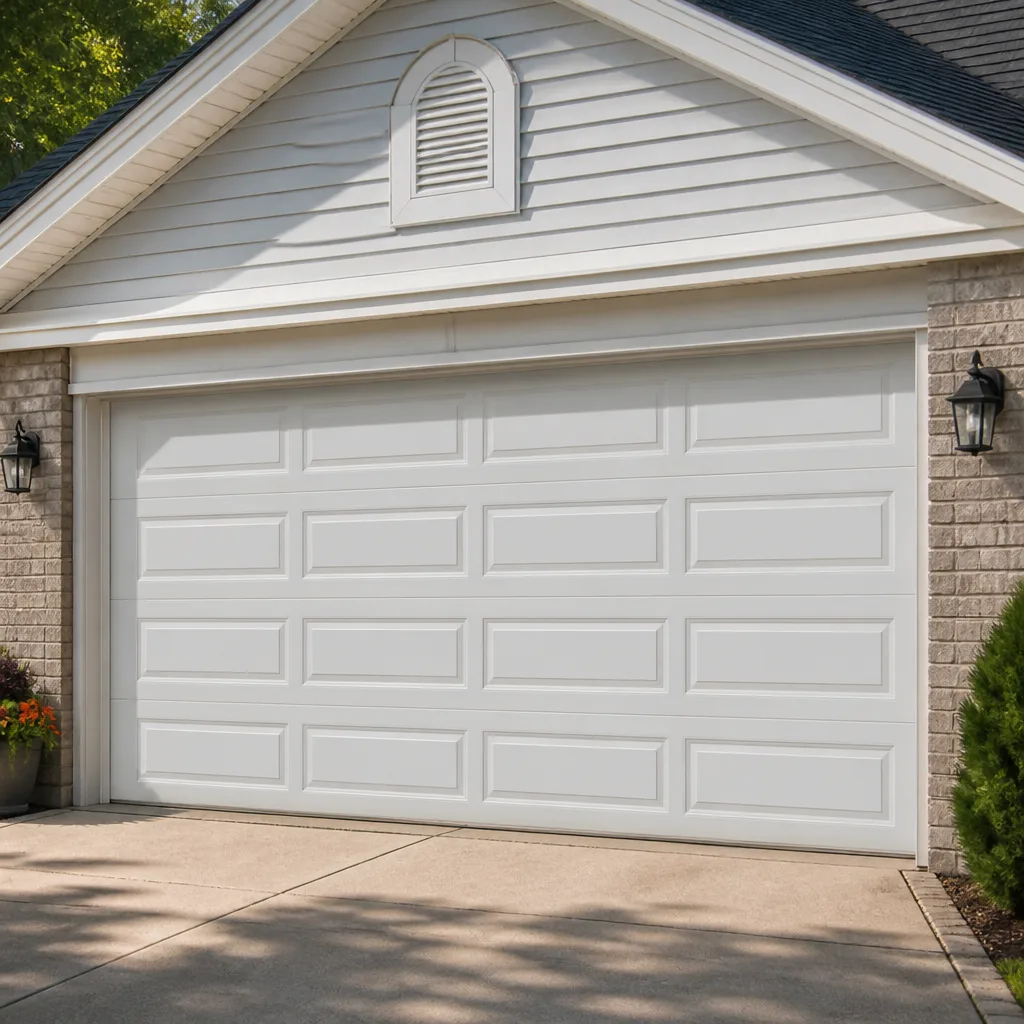 Raised-panel steel
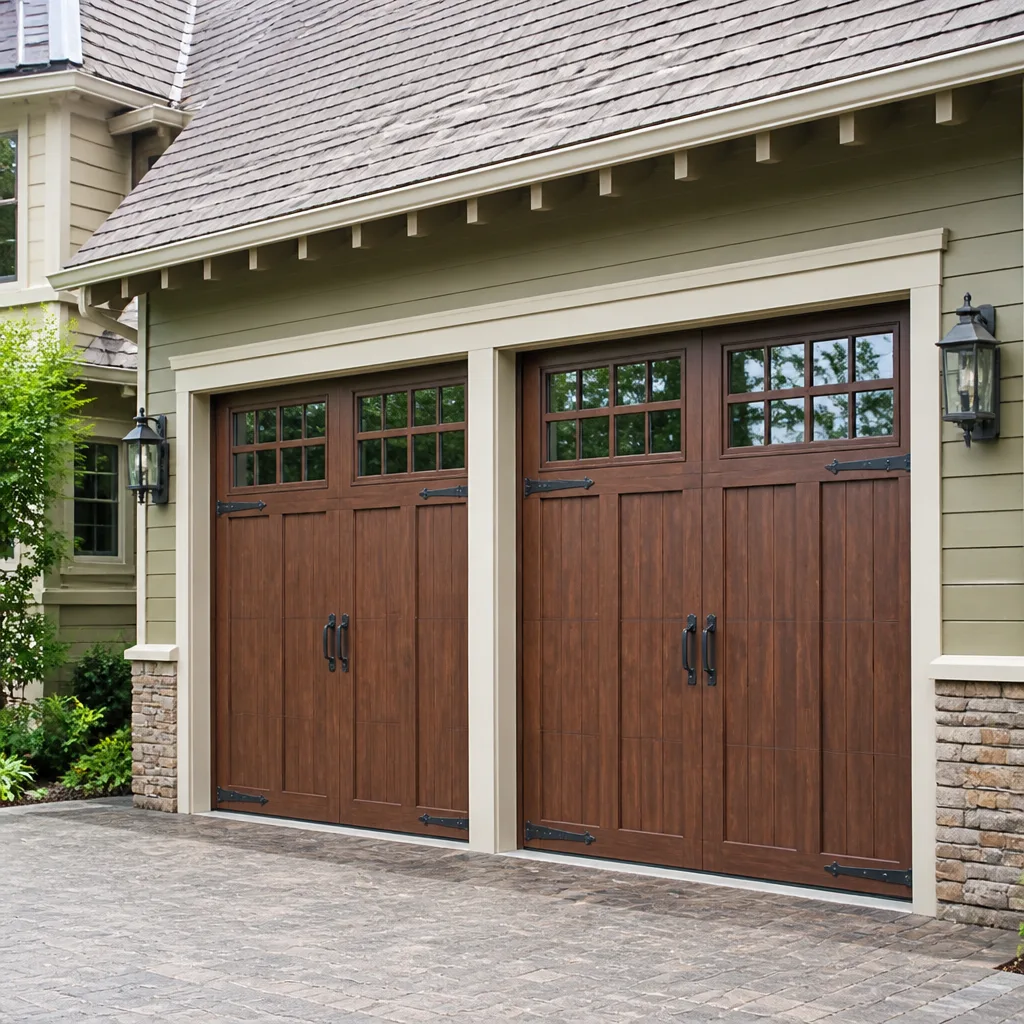 Carriage house
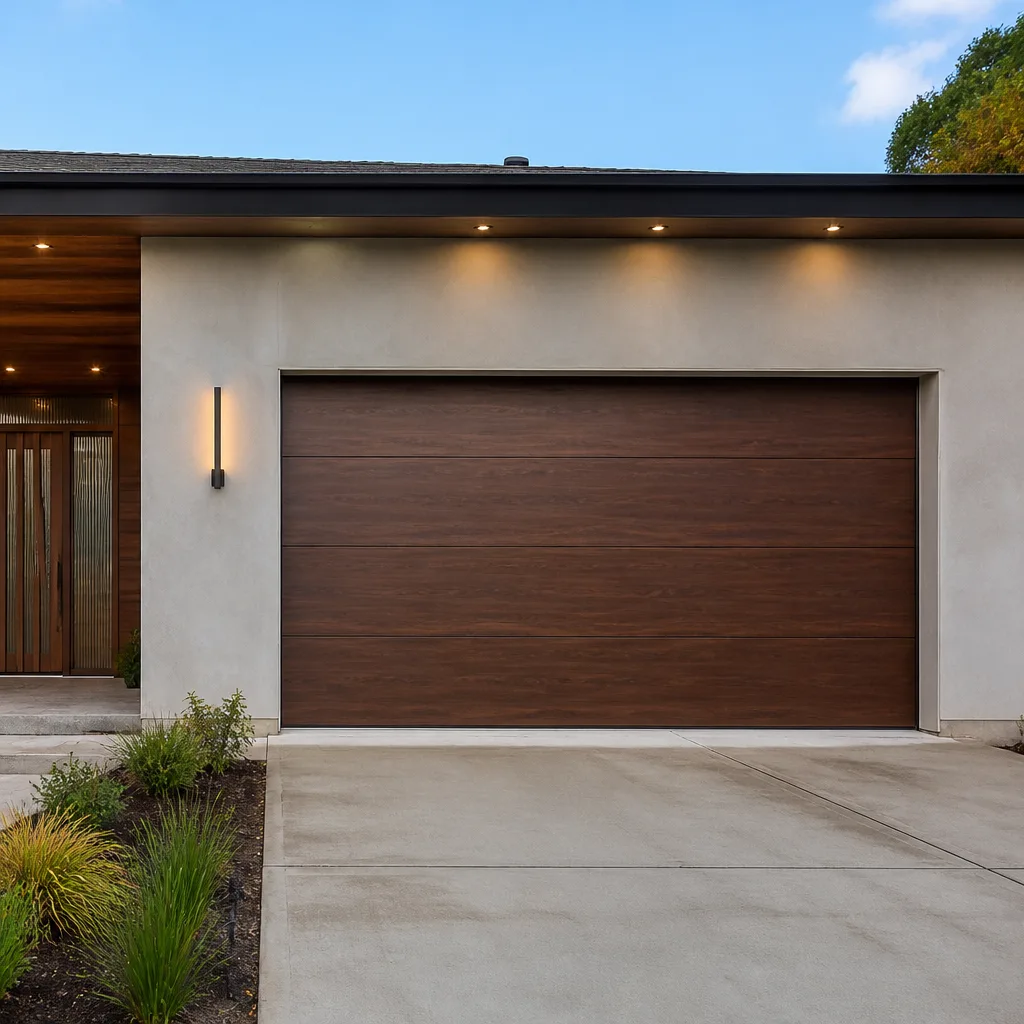 Modern flush
 Full-view glass
 LiftMaster openers
 Chamberlain openers
Full 25-point door and opener safety check with every visit - springs, cables, rollers, tracks, and your LiftMaster or Chamberlain opener included
You get a price before we start. It does not change when the pro arrives.
Get your free estimateGarage Door Warning Signs: A Morgantown Homeowner’s Reference Guide
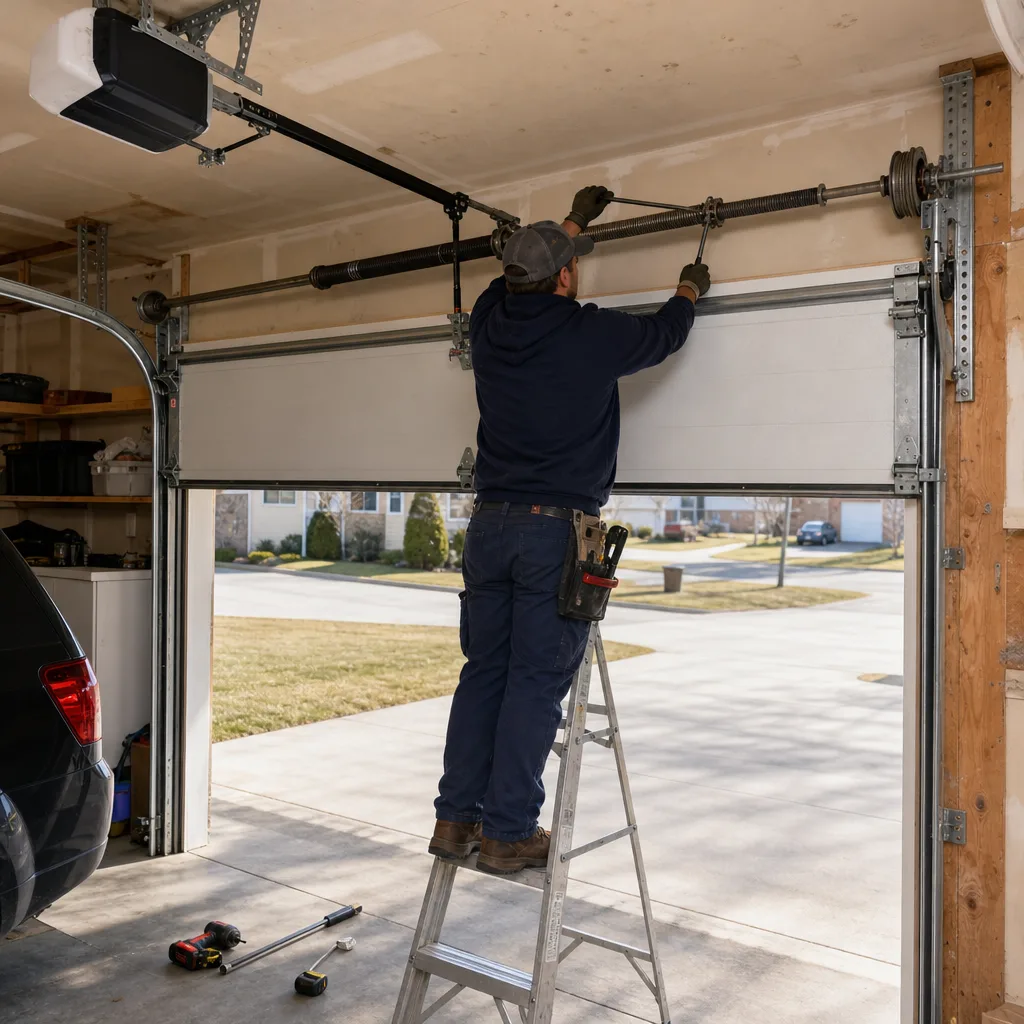
A garage door that’s “a little slow” or “makes a new noise” isn’t a quirk. It’s a system under abnormal stress, and in a torsion spring mechanism that stress has a predictable failure timeline. The grinding you hear this week is often the spring or cable telling you it’s weeks – sometimes days – from letting go. The trouble is that most homeowners wait for the bang, not the warning. This guide is written to flip that habit. We’ll walk through what each sound points to, how to spot visual asymmetry before it becomes a jammed door, which signs mean call today and which can wait for a scheduled appointment, and how to describe what you’re seeing so the right parts show up on the first visit. If you live in Morgantown and you’ve noticed something off with your door, this is the reference to keep handy.
Quick Answer
The most reliable garage door warning signs are new or worsening noises (grinding, squealing, popping, rattling), visible asymmetry like sagging panels or uneven gaps along the top seal, and an opener that strains or slows on a simple lift test. Any sign tied to springs, cables, or a door that won’t close fully is safety-critical and needs same-day attention; cosmetic or minor-performance issues can usually wait for a scheduled visit within the week. Spring and cable work is dangerous and should always go to a trained technician, not a weekend DIY fix.
Styles & brands we work with
- Raised-panel steel
- Carriage house
- Modern flush
- Full-view glass
- LiftMaster openers
- Chamberlain openers
Table of Contents
- The Acoustic Guide: What Each Noise Tells You
- Visual Asymmetry: Gaps, Sags, and Uneven Seals
- The Unassisted Lift Test: Is Your Opener Working Too Hard?
- Safety-Critical Signs vs. Signs That Can Wait a Week
- How Morgantown Weather Works on Your Door
- How to Document a Warning Sign for Your Technician
- Brand-Specific Signals: LiftMaster, Chamberlain, Genie, Clopay
- Preventive Habits That Catch Problems Early
The Acoustic Guide: What Each Noise Tells You
Sound is the earliest and most honest diagnostic signal a garage door gives you. A healthy door is quiet – a low, even hum from the opener and maybe a soft click at the travel limit. Any deviation from that baseline is information. In our experience, homeowners describe the noise as “grinding” or “a new sound,” and the specific character of that sound narrows down the failing component fast. Here’s how to translate what you’re hearing.
- Grinding: Metal-on-metal contact, most often worn rollers or a dry hinge. Left alone, grinding accelerates wear on the track and can score the roller shafts. It’s rarely an emergency, but it moves to the front of the list for a scheduled repair.
- Squealing: Usually a lubrication or roller issue. Squealing on a torsion-spring door can also point to a spring that’s losing tension and rubbing, which is a different, more serious matter. If the squeal is new and accompanied by a slower door, treat it as spring-related until a technician says otherwise.
- Popping or snapping: This is the one that gets our attention. A single loud pop, especially when the door is partway up or down, often means a torsion spring has snapped. Stop operating the door and call for same-day service; running the opener against a broken spring puts enormous strain on the motor and cables.
- Rattling: Loose fasteners, a worn top bracket, or a panel that’s vibrating against the track. Rattling is usually the least urgent of the four, but it signals parts working loose that will eventually cause misalignment.
One more sound worth knowing: a door that thumps or shudders as it travels. That’s rarely a lubrication issue – it usually means the door is out of balance or a cable is binding. In a Morgantown home where the door runs multiple times a day, a shudder compounds quickly into a full misalignment. When you’re ready to have a sound diagnosed properly, garage door repair starts with an inspection that traces the noise to its source rather than guessing.
Visual Asymmetry: Gaps, Sags, and Uneven Seals
Your door should look level and closed tight against the top seal. Stand back and check it from inside the garage with the door closed, then again from the driveway with it open. A door that looks different on one side than the other is telling you something mechanical is out of balance – usually a cable or spring on one side working harder than the other. Here’s what the visual signs typically point to:
- A visible gap along the top seal on one side: The door isn’t seating evenly. This is often the first sign of cable stretch or a spring losing tension on one side.
- A sag in the middle of a panel: Could be panel fatigue, a bent section, or a sign the door has been operated against a binding cable.
- Uneven gaps at the floor on the closed door: The door is out of level, which strains the opener and lets weather in.
- A visibly crooked door while it travels: One cable has likely gone slack or a drum has slipped. Stop using the door and treat this as safety-critical.
Visual asymmetry matters because it’s usually the tell that comes before the noise. A door that’s slowly going out of balance often runs quietly for a while, then starts to squeal or grind as the misalignment wears the moving parts. The earlier you catch a gap or a sag, the smaller the repair. On a door’s original springs, a small imbalance can be corrected before it becomes a snapped spring and a much larger bill.
The Unassisted Lift Test: Is Your Opener Working Too Hard?
An opener that’s tired, misadjusted, or fighting a binding door will eventually fail – usually at the worst time. There’s a simple way to tell whether your opener is straining: the unassisted lift test. It’s safe to do and takes two minutes.
- Disconnect the opener from the door using the manual release cord (usually a red handle). Make sure the door is fully closed first.
- Lift the door slowly by hand about halfway up, then let go. A balanced door should stay in place or drift only slightly.
- If the door wants to fall or rise on its own, the balance is off – the springs are no longer counterbalancing the door’s weight correctly, and your opener has been doing the extra work.
- With the door still disconnected, push it up and down a few inches and feel for binding or rough spots. A door that lifts smoothly by hand is one your opener can handle easily.
- Reconnect the opener only after you’re satisfied the door is balanced, and never reconnect a door that won’t stay put when you let go – that’s a repair first, not an opener problem.
This is the single most useful test we recommend to homeowners in Morgantown, because it separates “the opener is getting old” from “the door is out of balance and killing the opener.” If the door fails the balance test, no opener brand – LiftMaster, Chamberlain, Genie, or any other – will fix the underlying problem. The springs need attention first. If you suspect the opener itself, garage door opener repair can confirm whether the motor, the travel limits, or the door balance is the real culprit.
Safety-Critical Signs vs. Signs That Can Wait a Week
Not every warning sign demands immediate action, but some absolutely do. Knowing the difference keeps you from panicking over a squeaky roller and, more importantly, keeps you from ignoring a snapped spring. Here’s how we sort them.
Safety-critical – call for same-day service:
- A loud pop followed by a door that won’t lift. A broken torsion spring means the door’s full weight is on the opener and cables. Stop using it.
- A visibly crooked door or one that hangs at an angle. A slack or snapped cable can let the door drop without warning.
- A door that won’t stay up when partly open, or falls under its own weight.
- Any sticking or binding you can hear or feel combined with the door coming off its tracks.
Can wait for a scheduled appointment within the week:
- Squealing or squeaking that’s new but hasn’t changed the door’s operation.
- Rattling from loose hardware.
- A slightly slow opener on a door that passes the balance test – this is often a motor or travel-limit issue to schedule, not a drop-everything emergency.
- Cosmetic dents, faded paint, or a seal that’s starting to wear.
The line between these two lists is the spring and cable system. Anything that suggests a spring, cable, or tension failure goes in the urgent column because those components control the door’s weight. Springs and cables carry serious stored energy; a trained technician handles them with the right tools and safety gear. We don’t recommend homeowners touch them.
How Morgantown Weather Works on Your Door
A garage door in Morgantown lives through a real range of weather – humid summers, cold winters, and a freeze-thaw cycle that works on the hardware year round. That range shows up in the door’s wear patterns. In humid months, hinges and rollers can pick up surface rust faster than homeowners expect, and the squealing that follows is often blamed on a failed part when it’s really a lubrication issue. In cold snaps, metal contracts, springs stiffen, and a door that was balanced in October can suddenly feel heavy and slow in January – the opener strains against it, and the balance drifts.
Freeze-thaw also works on the door’s weatherstripping and the gap along the floor. A seal that shrinks or hardens can leave a gap that lets drafts and moisture in, which then feeds back into hinge and track corrosion. If you notice a new gap at the floor or a door that closes with a different sound once the cold sets in, that’s a seasonal sign – not necessarily a failure, but a reason to schedule a check and re-balance before it puts strain on the opener. In our experience, a door adjusted once in fall and once in spring runs measurably smoother through a Morgantown year than one left alone.
How to Document a Warning Sign for Your Technician
When something’s wrong, you want the technician to arrive with the right parts. That’s easier when you can describe the problem precisely. A vague “it’s acting up” tells us to bring a full parts kit; a specific description lets us bring exactly what’s needed and finish the repair in one visit. A few minutes of note-taking and a couple of photos go a long way.
- Note when the sound or behavior happens: on opening, on closing, at a certain height, or the whole travel. A grinding noise only on the way up points to different parts than one that happens the entire time.
- Take a photo of the door closed from inside the garage, then from the driveway. Those two shots let us spot asymmetry you might not notice from one angle.
- Run the unassisted lift test first, and note the result. “The door falls when I let go” saves a diagnostic step.
- Write down the door and opener brand if you can see it – often a sticker on the opener unit or a tag on the door panel. LiftMaster, Chamberlain, Genie, and Clopay stickers are the most common on Morgantown homes, and knowing the brand helps us bring the right remote, logic board, or spring-size range.
- Note the door size and material if you know it (single vs. double width, steel vs. wood-look).
- Take a photo of the spring above the door, if you can safely see it – the wound coils and the spring’s color-coded end give a technician the size range without a second trip.
None of this requires you to touch the door’s spring or cable system yourself. You’re just gathering information. A clear description and two photos are often the difference between a repair that finishes on the first visit and one that needs a return trip for parts.
Brand-Specific Signals: LiftMaster, Chamberlain, Genie, Clopay
Garage door systems are mostly generic in how they fail, but the specifics shift with the brand. Knowing what’s typical for your system helps you judge severity. If you have a LiftMaster or Chamberlain opener, most modern units have self-diagnostic LED patterns – a flashing sequence that points to a sensor, travel, or logic issue. That’s a fast read. Older Genie and Craftsman openers don’t always have that, so the sound and the balance test carry more weight. On the door side, a Clopay steel door’s panel dents and seal wear behave differently from a carriage-style door, and that affects whether a sign is cosmetic or structural.
We work on eight of the most widely installed garage door and opener brands – LiftMaster, Chamberlain, Genie, Clopay, Amarr, Wayne Dalton, Craftsman, and Raynor – so the technician who arrives already knows what signals matter on your system. That matters more than it sounds. A brand-specific technician reads the diagnostic code on a LiftMaster and knows the common failure points on a Genie without trial and error. When the warning sign sits in the opener, we can usually confirm whether it’s a replaceable component or a full unit, and when it sits in the door itself, garage door spring repair covers the most safety-critical part of the system with the right handling.
The point of brand fluency isn’t loyalty to a logo. It’s that the first visit can send the right technician with the right knowledge and parts, rather than a general handyman guessing at a system they see once a month.
Preventive Habits That Catch Problems Early
The best way to avoid an emergency call is to catch the warning signs early. A few habits, done on a regular schedule, keep you ahead of the failure timeline rather than reacting to it.
- Listen before you drive. On your next few trips, pause and actually listen to the door as it opens. You’ll notice a new sound faster than you think, and the earlier you catch it, the smaller the repair.
- Run the unassisted lift test monthly. It’s the fastest way to know whether the springs are still doing their job. If the door starts dropping when you let go, that’s your early warning.
- Look at the door closed once a week. A quick glance from inside and from the driveway catches a gap or sag before it becomes a jammed door.
- Keep hinges and rollers lubricated with a proper garage door lubricant. This is one thing a homeowner can safely do, and it prevents the squealing that’s often mistaken for a failed part.
- Schedule a balance check around seasonal changes. A door that’s balanced going into winter and again into summer runs easier on the opener and on the springs.
These habits don’t replace a professional inspection, but they make it far less likely that you’ll be the homeowner calling after a snap. When a sign does show up, you’ll know whether it goes in the urgent pile or the scheduled pile – and you’ll have the description ready for whoever comes out. If you’d rather start with a full inspection, a dedicated Garage Door Repair Morgantown visit covers the springs, cables, opener, and balance in one trip.
Common Mistakes to Avoid
- Waiting for the door to stop working. A door that still opens is still failing – the sound and slowness are the warning. Waiting for a total failure usually means a bigger repair and a call at a bad time.
- Ignoring one loud pop. A single pop with no obvious follow-up is one of the most common descriptions of a snapped torsion spring. If you hear it, stop using the door and schedule same-day service.
- Treating a slow opener as purely a motor issue. Nine times out of ten the opener is straining because the door is out of balance. Replacing the opener without fixing the door costs more and fails again.
- Lifting the door by hand to “test it” when it’s crooked. A door that’s off its tracks can drop without warning. Don’t operate it – call a technician.
- Assuming a Morgantown-brand specialist means any brand. Ask whether the technician handles your specific brand – LiftMaster, Chamberlain, Genie, Clopay, or others – before the visit so parts match on the first trip.
- Describing the problem in one word. “Grinding” alone doesn’t tell a technician whether to bring rollers or a spring. Note when it happens, from which side, and what the door does.
- Lubricating a binding cable or spring to stop a noise. Lubrication on a binding or broken component can mask a failure and doesn’t fix the tension problem. Leave spring and cable work to a trained technician.
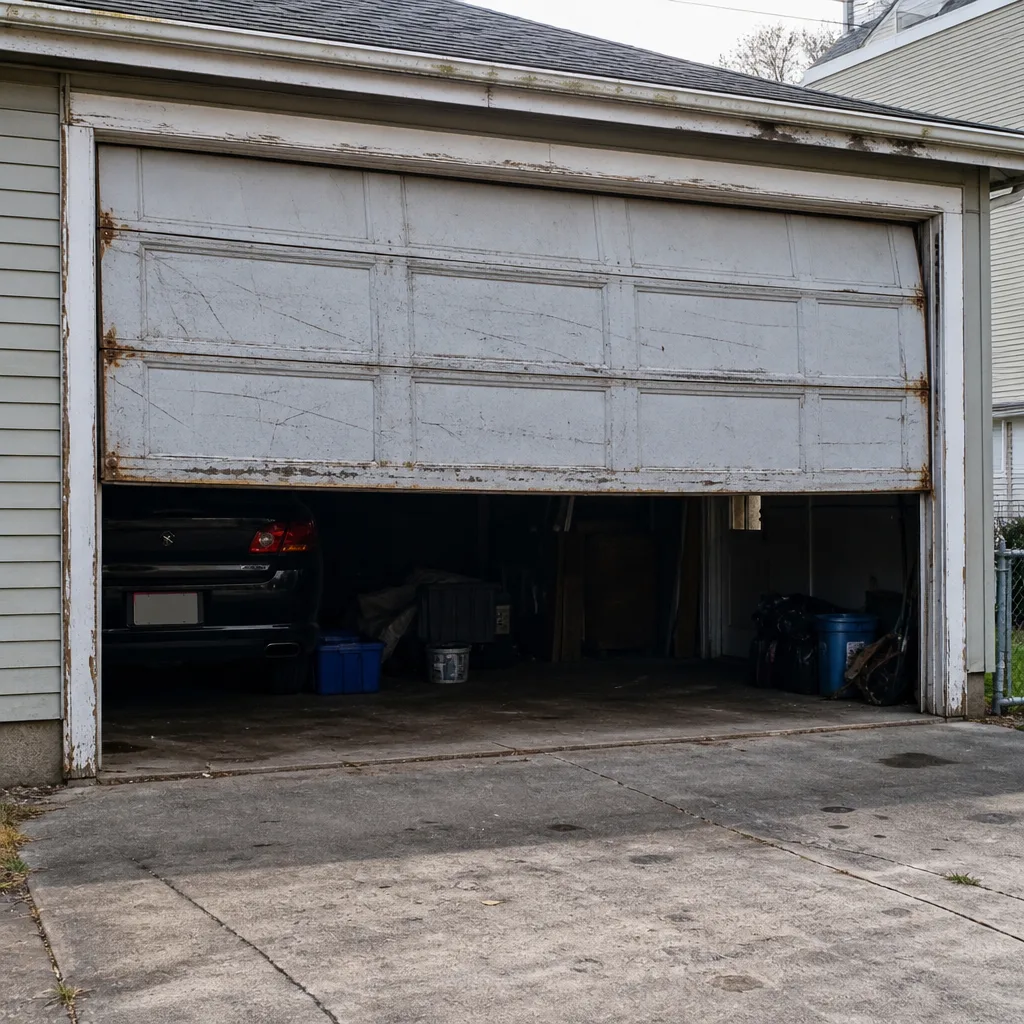
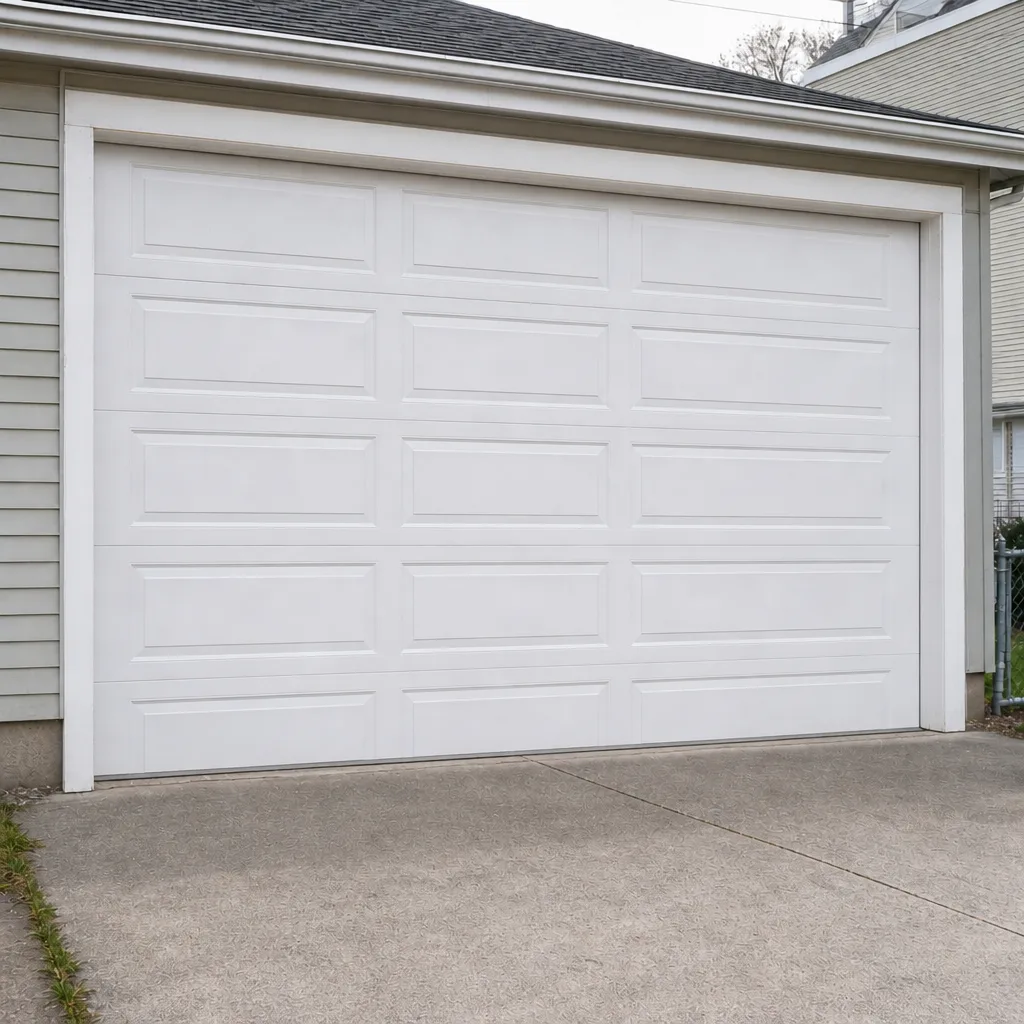
See the difference
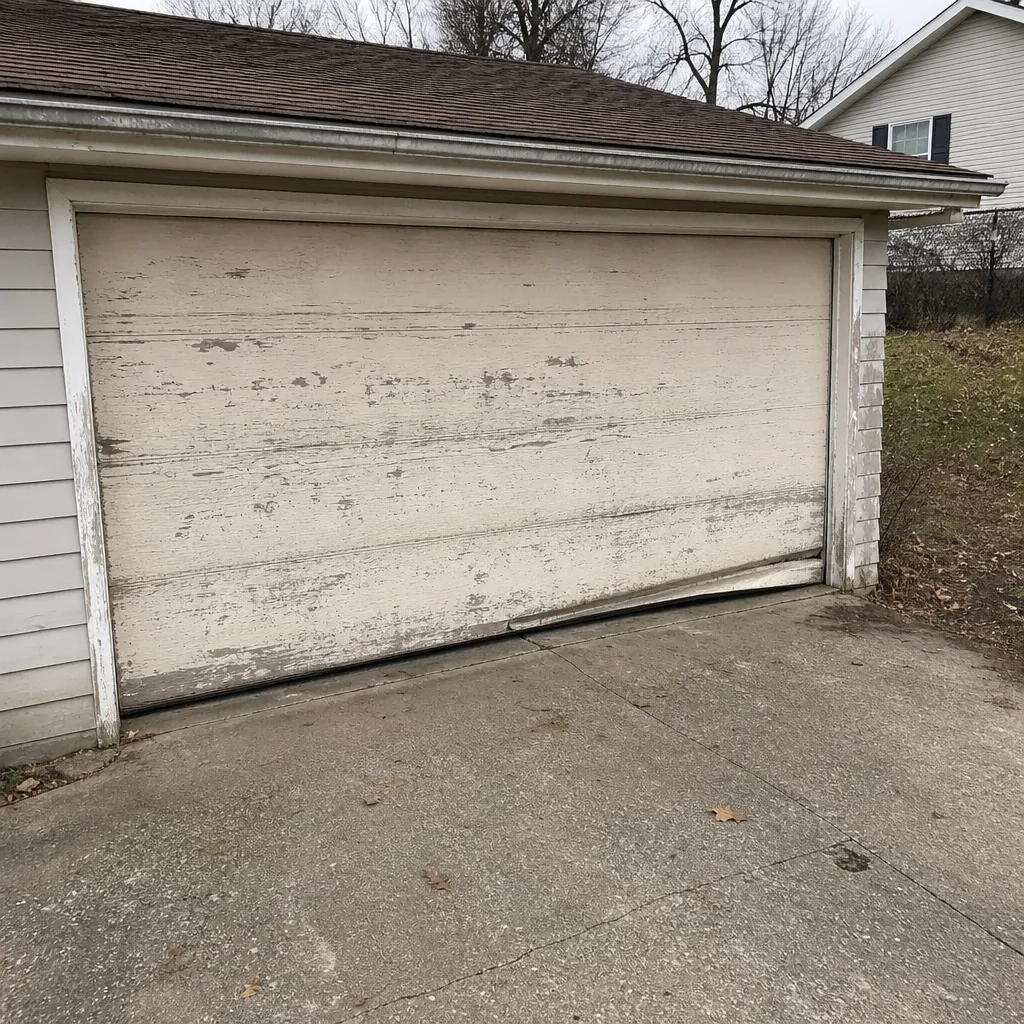 Before
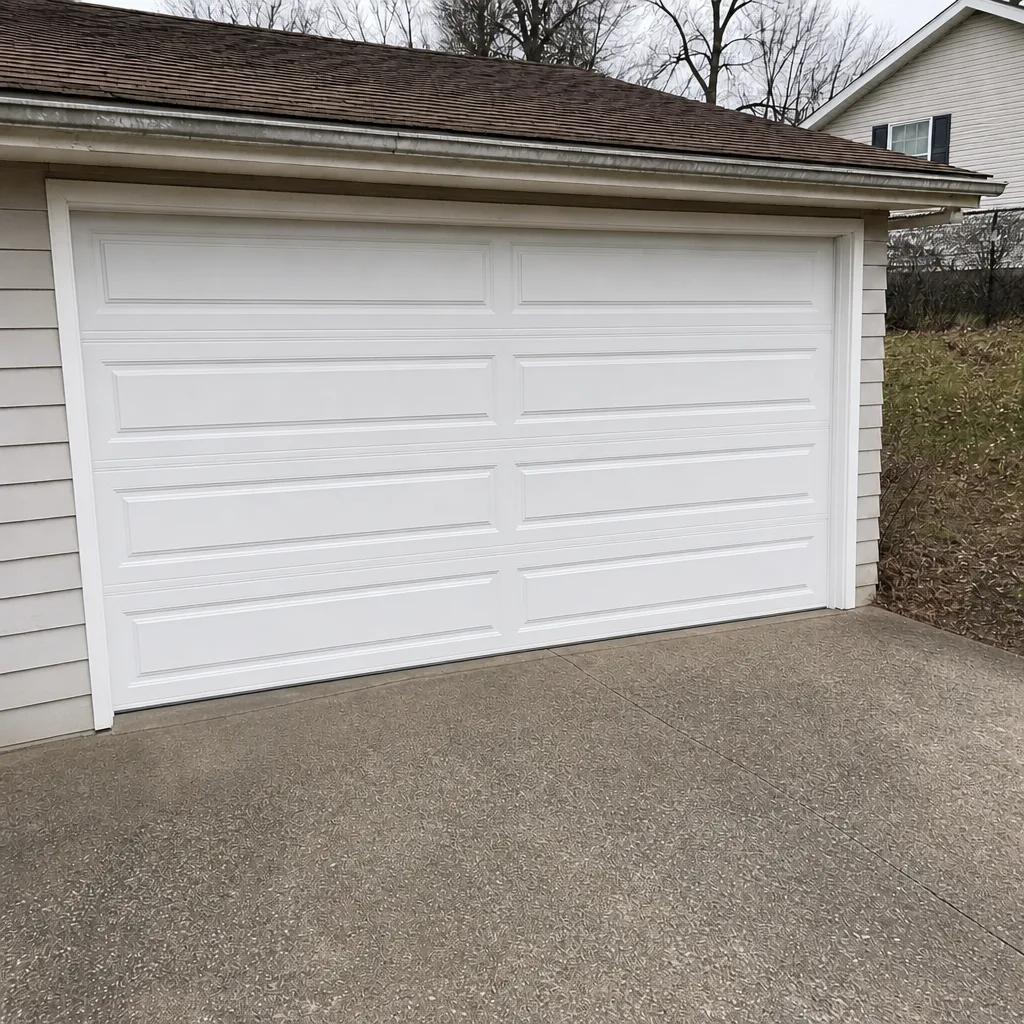 After
 Before
 After
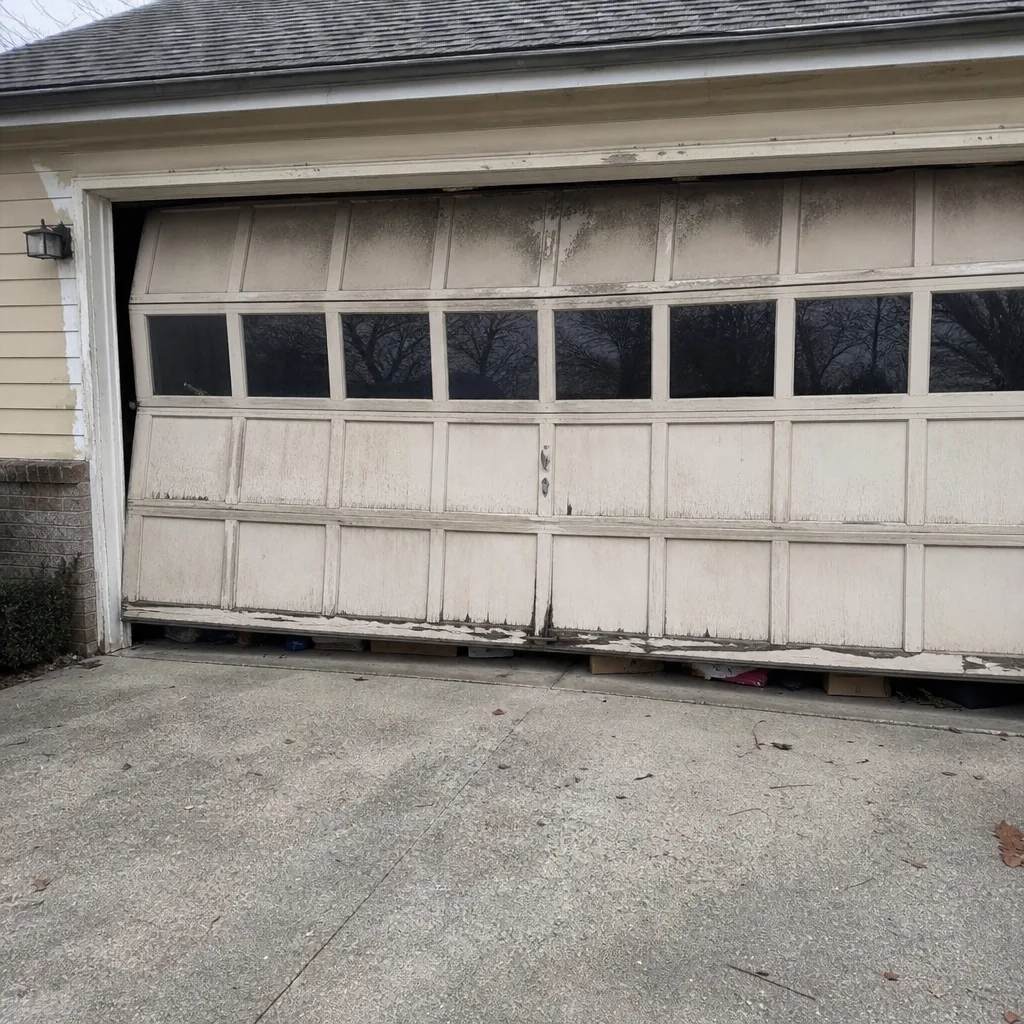 Before
 After
When to Call a Professional
Call a professional the same day for any sign that involves a spring, a cable, or a door that won’t stay in position. That includes a loud pop, a crooked door, a door that falls when partly open, and any door that slams or fails to close. These are the signs where stored energy is at play, and they’re not safe to investigate yourself. For symptoms that are annoying but not structural – squealing, rattling, a slow opener on a balanced door – a scheduled visit within the week is enough. Garage Door Repair Morgantown offers free estimates in Morgantown, and if you’re not sure which category your sign belongs to, we can help sort it out over the phone. Call (844) 625-7628. We answer 24/7. Fast dispatch from 7am to 7pm, Sunday through Friday. Our technicians have up to 15 years of experience, and the price is quoted and agreed before any work starts.
Frequently Asked Questions
Grinding usually points to metal-on-metal contact from worn rollers or a dry hinge, and occasionally a misaligned track. It’s rarely an emergency but it accelerates wear quickly, so get it looked at within a week before it damages the track. Call (844) 625-7628 for an exact quote – estimates are free.
A single loud pop, especially followed by a door that won’t lift, usually means a torsion spring has snapped, and that is a same-day situation. Stop using the door and stop running the opener – the door’s weight is now on the cables and the motor. Call (844) 625-7628. We answer 24/7, and fast dispatch runs from 7am to 7pm, Sunday through Friday.
No – torsion and extension springs hold stored energy that can cause serious injury, and this is the one part of the system homeowners shouldn’t touch. A trained technician handles springs with the proper tools and safety procedures. Call (844) 625-7628 for spring repair – estimates are free.
Yes, and it’s one of the most useful ones. A slow door usually means the opener is working harder than it should because the door’s balance has drifted. Run the unassisted lift test: if the door drops when you let go, the springs need attention before the opener does. Call (844) 625-7628 for an exact quote.
Do a quick sound and visual check weekly, run the unassisted lift test monthly, and schedule a professional balance check around the seasonal changes – in our experience, that catches most warning signs before they turn into a repair. If you’d rather have a tech look at it, call (844) 625-7628.
No – the written estimate is the price, and we quote and agree it before any work starts. If the inspection turns up a problem that wasn’t in the original description, you’ll hear about it before anything gets done. Call (844) 625-7628 for a free estimate.
The Bottom Line
Garage doors almost never fail without warning. The grinding, the squeal, the gap along the top seal, the door that’s a little heavy – those are the system telling you it’s under abnormal stress, weeks before it lets go. The homeowners who avoid the emergency call are the ones who read the warning signs early, tell the difference between a squeaky roller and a failing spring, and describe the problem clearly enough to get the right parts on the first visit. In Morgantown, with the freeze-thaw cycles working on the hardware all year, that habit pays off. If you’ve noticed any of the signs in this guide, call (844) 625-7628 for a free estimate. We answer 24/7. Fast dispatch, 7am-7pm, Sunday through Friday.
Written by the team at Garage Door Repair Morgantown.